Overview of the Korean War
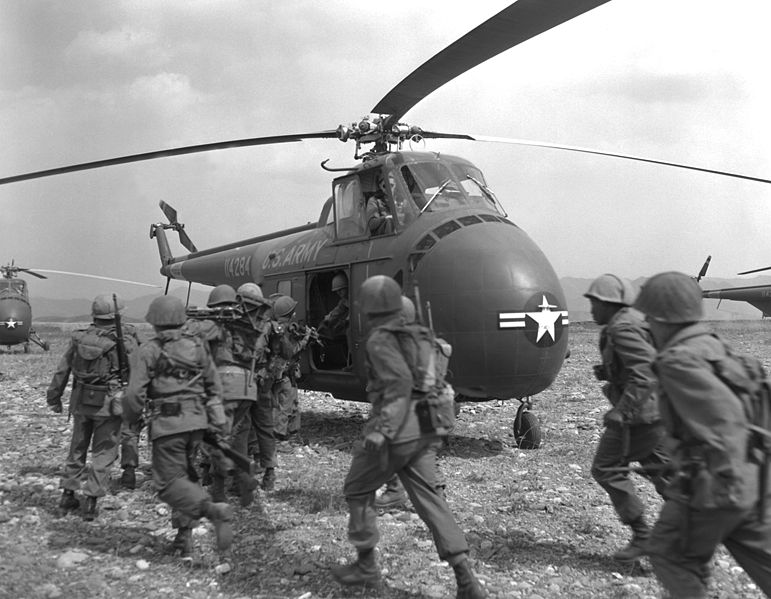
The Korean War is also known as the Forgotten War due to its level of remembrance by society today compared to other modern wars. It started when North Korea crossed over the 38th parallel and invaded South Korea on June 25th, 1950. The United States was able to convince the United Nations to support South Korea, mostly because the Soviet Union was protesting the refusal to accept China’s entrance to the United Nations and was therefore not at the meeting to vote against the action. The United Nations was first lead by General MacArthur, who was able to push the North Koreans back past the 38th and he continued pushing till close to the Chinese border. The Chinese, fearing a invasion, sent in their army to counter the UN army.
The Chinese pushed the UN Forces back over the 38th parallel, and then the UN push back to the 38th, holding it there. Peace did not come for a few years, resulting in neither side holding nor gaining any major amount of land. MacArthur was removed from power due to political disagreements with President Truman. President Truman did not agree with MacArthur’s proposal to nuke either North Korea or China. This had a major impact on the public opinion of Truman and he ended up not running for re-election. Since Truman did not run for re-election, he was replaced by Dwight Eisenhower. On the 27th of July, 1953 North and South Korea were able to sign a cease fire and created a zone on the 38th parallel that would not be crossed. This neutral zone is still in effect today.
The Chinese pushed the UN Forces back over the 38th parallel, and then the UN push back to the 38th, holding it there. Peace did not come for a few years, resulting in neither side holding nor gaining any major amount of land. MacArthur was removed from power due to political disagreements with President Truman. President Truman did not agree with MacArthur’s proposal to nuke either North Korea or China. This had a major impact on the public opinion of Truman and he ended up not running for re-election. Since Truman did not run for re-election, he was replaced by Dwight Eisenhower. On the 27th of July, 1953 North and South Korea were able to sign a cease fire and created a zone on the 38th parallel that would not be crossed. This neutral zone is still in effect today.
